
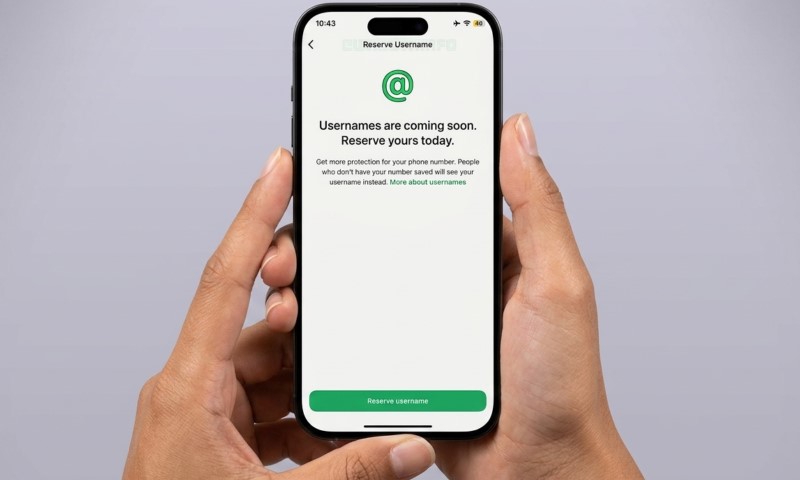
WhatsApp usernames are arriving in 2026 as an optional way to chat without revealing a phone number. The privacy benefit is significant, especially for group members, customers, creators, sellers, and people meeting online.
A username, however, also creates an identity that can be copied, misspelled, squatted, or paired with a stolen profile photo.
Meta has reserved certain prominent names, removed public username search, added an optional access key, and imposed limits on unsolicited contact. Even so, impersonation may become one of the feature’s defining safety problems.
Fraudsters no longer need to control a victim’s known phone number when a convincing handle, familiar photo, and urgent message can create enough trust.
The concern is substantial. U.S. consumers reported losing $3.5 billion to imposter scams during 2025, according to Federal Trade Commission data.
What Is Changing on WhatsApp?
https://www.youtube.com/watch?v=F6rBfZa9Ewo
WhatsApp users will be able to create a unique handle and let new contacts message them without seeing their phone number.
Meta announced username reservations on June 29, 2026. The company said the full contact feature would arrive gradually during the following months, with availability varying by country.
WhatsApp has more than three billion users, so Meta opened reservations before the full launch to give people time to secure suitable names, according to the official Meta announcement.
A personal WhatsApp username:
- Is optional rather than mandatory
- Begins with an @ symbol
- Must contain between three and 35 characters
- Can include lowercase letters, numbers, underscores, and periods
- Must be unique to one WhatsApp account
- Can be changed or removed
- Does not replace the phone number required for account registration
People must know the exact username before starting a new conversation. WhatsApp will not provide a public directory, autocomplete suggestions, or a browsable list of accounts.
An optional username key can add another step, requiring a sender to know both the handle and the separate key, as explained in the WhatsApp username guide.
| Identity Element | Main Purpose | Visible to New Contacts | Unique |
| Phone number | Account registration and traditional contact discovery | Hidden when username privacy is enabled | Yes |
| Username | Starting chats without exchanging numbers | Yes | Yes |
| Profile name | Human-readable account label | Yes | No |
| Profile photo | Visual identification | Depends on privacy settings | No |
| Username key | Restricting first-time contact | Shared separately | User controlled |
A username therefore becomes an address rather than proof of identity. Someone who owns @CityBankHelp, for example, is not automatically connected to a bank with a similar name.
Why Are WhatsApp Usernames Useful?
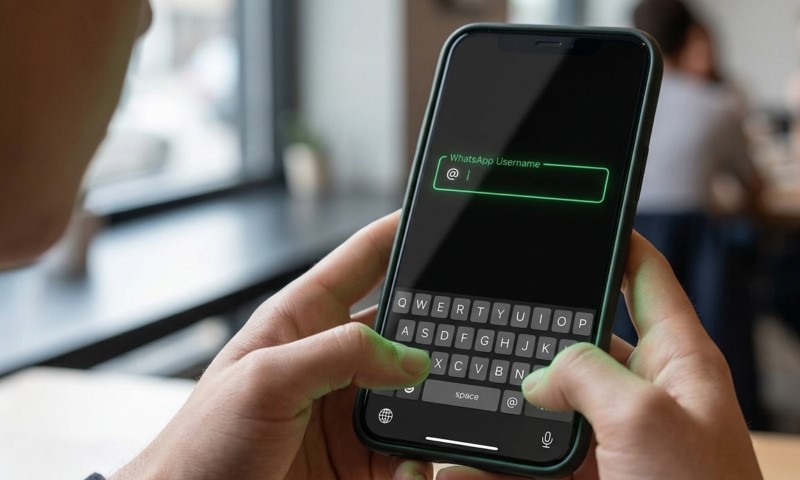
Usernames solve a genuine privacy problem: phone numbers are persistent identifiers connected to many parts of everyday life.
A mobile number may be linked to banking, delivery accounts, workplace systems, social profiles, two-factor authentication, and public databases. Sharing it with a marketplace seller or every member of a large community group can expose more information than a person intended.
WhatsApp gave the example of joining a sports team’s parent chat without handing a personal number to unfamiliar participants. Creators and small businesses could also publish a handle while keeping the number behind the account private.
Once username messaging launches, first-time contacts will no longer see a user’s number when the privacy option is enabled.
The change also makes WhatsApp more consistent with Signal, Telegram, Instagram, and other services where people can connect through platform-specific identifiers.
Privacy and identity confidence remain separate questions. A hidden number protects personal data. It also removes one clue that users previously relied on when deciding whether a message came from someone they knew.
Why Could Impersonation Become a Bigger Problem?
Impersonation becomes easier when a platform introduces memorable public identifiers that resemble names, brands, job titles, or organizations.
A fraudster may not need the exact handle belonging to a public figure or company. Small alterations can be convincing on a mobile screen:
| Legitimate-Looking Handle | Possible Lookalike |
| @citybank | @city.bank |
| @marialewis | @maria_lewis |
| @taxoffice | @taxofficehelp |
| @hoteladriatic | @hoteladriatic1 |
| @supportteam | @support_team |
A copied profile photograph, familiar display name, and plausible opening message can make the difference harder to notice.
Username Squatting Has Already Affected Social Platforms
View this post on Instagram
Research on X shows how quickly lookalike identifiers can become an abuse problem.
A 2024 study accepted at the ACM Asia Conference on Computer and Communications Security examined hundreds of thousands of username variations derived from celebrity accounts.
Researchers found tens of thousands of active variants that were likely bots, along with many accounts using profile names and images similar to the originals.
Users mistakenly mentioned squatted accounts hundreds of thousands of times. Some lookalikes also received favourable placement from the platform’s search recommendation system.
The username-squatting study examined X rather than WhatsApp, yet its findings show how small username variations can redirect attention and create mistaken trust.
WhatsApp’s lack of a public directory removes one source of accidental discovery. Scammers can still distribute deceptive handles through social posts, advertisements, fake websites, QR codes, dating apps, email, or messages sent on another service.
Private Conversations Can Make Fraud More Persuasive
WhatsApp is built around direct, personal communication. That environment can make a false identity feel credible once the first message reaches its target.
Common scenarios could include:
- A “relative” claiming to have changed their username
- A manager requesting an urgent payment
- A bank representative reporting suspicious activity
- A celebrity or creator promoting an investment
- A hotel requesting a second deposit
- A government employee threatening legal action
- A customer support account asking for a login code
Urgency usually carries more weight than technical sophistication. The attacker wants the recipient to act before checking the handle, calling a known number, or visiting an official website.
Meta said WhatsApp detected and banned more than 6.8 million accounts linked to criminal scam centres during the first half of 2025. Investigations found that campaigns often moved victims between SMS, social networks, messaging services, cryptocurrency platforms, and other apps, according to Meta’s report on messaging scam operations.
Usernames could fit easily into such multi-platform operations. A fake advertisement might direct a victim to a WhatsApp handle that appears to belong to a business. The conversation then moves into an encrypted private channel where outside observers cannot see the pitch.
Are Phone Numbers More Trustworthy Than Usernames?
View this post on Instagram
Phone numbers provide traceable account infrastructure, yet they have never guaranteed that a sender is genuine.
Fraudsters already use newly registered SIM cards, compromised accounts, virtual numbers, spoofed caller identification, and “new phone” stories.
Europol has documented scams where criminals contact parents through WhatsApp while pretending to be a son or daughter using a replacement number during a cybercrime service takedown.
A username changes the presentation of identity. Instead of asking, “Do I recognise the number?”, users may ask, “Does the handle look correct?”
That shift matters because people process names visually. @AlexMorgan, @Alex.Morgan, and @AlexMorgan1 may appear nearly identical during a hurried conversation. A phone number is harder to imitate visually, although few people remember complete numbers without checking their contacts.
The safest conclusion is that neither identifier proves who controls an account. Identity should come from account history, verified business information, known contact channels, and independent confirmation.
What Safeguards Is WhatsApp Adding?
WhatsApp has announced several protections aimed at reducing discovery abuse, squatting, and mass messaging.
| Safeguard | Intended Benefit | Remaining Question |
| Reserved prominent usernames | Protects celebrities, public figures, governments, and major entities | How many spelling variations are covered? |
| Instagram and Facebook claims | Helps eligible account owners keep a consistent Meta identity | What happens when different people own similar names across platforms? |
| No public directory | Prevents broad username browsing and casual discovery | Handles can still be shared elsewhere |
| Exact-match contact | Makes random discovery harder | Lookalikes can be promoted through external links |
| Optional username key | Adds a second secret for first contact | Many users may leave it disabled |
| Limits on new contacts | Restricts high-volume outreach | Slow, targeted attacks may avoid limits |
| Blocks on repeated guessing | Reduces automated username enumeration | Real-world effectiveness remains untested publicly |
| Phone registration | Retains an account-level link to a mobile number | The number may remain hidden from recipients |
| Reporting and blocking | Gives users a response after suspicious contact | Action often occurs after exposure |
WhatsApp told Reuters that it will limit how many new people an account can contact and block repeated attempts to guess usernames. A phone number will remain necessary for registering an account, according to reporting on the planned username safeguards.
Meta has also reserved usernames associated with high-profile people, companies, organizations, and government bodies. Eligible Facebook and Instagram account holders can claim corresponding WhatsApp handles, according to an Associated Press report.
The controls appear more cautious than the open username systems used by many social networks. Their effectiveness will depend on enforcement against near matches, cloned profile information, compromised legitimate accounts, and misleading business names.
Why Did India Pause the Rollout?
India asked WhatsApp to stop the local rollout while officials assess fraud, phishing, impersonation, and anonymity concerns.
The Ministry of Electronics and Information Technology issued its direction on July 1, 2026. India is WhatsApp’s largest national market, with more than 500 million users, making the regulatory review important for the feature’s wider development.
Meta submitted a response explaining the feature and its safeguards. As of July 14, the username rollout remained on hold in India while consultations continued and the government reviewed the company’s reply, according to India Today’s update.
Indian officials argue that hidden numbers could make digital arrest scams and other impersonation schemes harder for ordinary users to recognise. Digital-rights groups have challenged the government’s legal basis for stopping a product feature before launch, raising a separate debate over privacy, anonymity, and state control.
The disagreement highlights the central policy question: how should a messaging service protect a person’s number without giving criminals a more convincing identity layer?
How Can Users Protect Themselves?
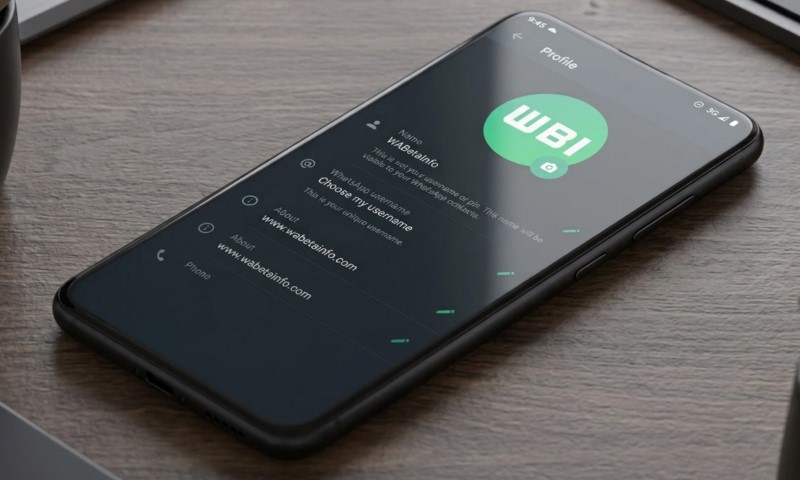
Users should treat a WhatsApp username as contact information, not authentication.
Reserve Important Names Early
Individuals, businesses, schools, charities, creators, and local organizations should claim their established handles when reservations become available. Consistent usernames across official websites and verified social profiles reduce ambiguity.
Businesses should also monitor obvious variations containing words such as “help,” “support,” “billing,” or “official.”
Enable the Username Key
A username key reduces unsolicited contact because a sender needs an additional piece of information before opening a first conversation. The key should be shared privately rather than posted beside the username.
Verify Money Requests Outside WhatsApp
A request involving money, passwords, verification codes, gift cards, cryptocurrency, bank transfers, or account recovery deserves a second check.
Call the person through a saved number, open the company’s official app, or type the organization’s website address manually. Avoid using the phone number or link supplied in the suspicious conversation.
Meta recommends pausing, questioning the request, and verifying the sender through another communication method.
Inspect the Whole Profile
Check the exact spelling, punctuation, profile history, business information, mutual groups, and context of the first message. A familiar photograph offers little assurance because public images are easy to copy.
A legitimate contact suddenly creating a new username should be verified through an existing channel.
Report Lookalike Accounts
WhatsApp allows users to report a username from the account’s chat or profile page and block further contact. Reports become more valuable when submitted early, before a deceptive handle reaches a larger audience. Instructions are available in the account-reporting documentation.
What Should Meta Do Next?

Meta will need to manage usernames as a security system rather than a simple profile feature.
Strong protection would include automated detection of typo variants, warnings when a handle closely resembles a known brand, clear account-age information, prominent verification for legitimate businesses, rapid appeals for trademark owners, and friction before payments or sensitive requests from new contacts.
A particularly useful warning might tell the recipient that an account was recently created, has never contacted them before, and uses a username similar to a recognized organization. Such context would target the moment when a person is deciding whether to trust the conversation.
Meta will also need transparent enforcement data. Useful reporting could include the number of impersonation complaints, removal times, repeated offenders, protected-name disputes, and scam accounts detected before they contacted anyone.
Without public measurements, users and regulators will have little evidence showing whether the protections work at WhatsApp’s scale.
The Privacy Gain Is Real, and So Is the Identity Risk
WhatsApp usernames can prevent unnecessary phone-number exposure and give users more control over who can reach them. For group chats, online marketplaces, creators, businesses, and casual contacts, the privacy improvement could be substantial.
The same feature creates a valuable new target for fraudsters. Lookalike handles, copied photos, urgent requests, and cross-platform promotion can make a false account appear legitimate even without access to the victim’s known phone number.
WhatsApp has avoided several mistakes made by open social networks. There is no public username directory, exact handles are required, prominent names are reserved, and an optional key can restrict contact. Real protection will depend on how well Meta detects near matches and deceptive behaviour after millions of usernames enter daily use.
For users, one rule remains dependable: a familiar name or photograph is never enough. Verify sensitive requests through a contact method already known to be genuine.

Dave Mustaine is a business writer and startup analyst at Sharkalytics.com. His articles break down what happens after the cameras stop rolling, highlighting both big wins and behind-the-scenes challenges.
With a background in entrepreneurship and data analytics, Dave brings a sharp, practical lens to startup success and failure. When he’s not writing, he mentors founders and speaks at entrepreneur events.