Streaming has moved far past casual play sessions shared with friends. Many gamers now treat live content creation as a steady side hustle or a full-time profession.
Market forecasts show the global gaming industry reaching $205 billion by 2026, signaling strong demand for entertainment built around interactive play.
Platforms such as Twitch, YouTube Gaming, and Facebook Gaming continue to release new monetization tools, making income generation possible even for creators at early stages.
Growth in audience size matters, yet strategy, consistency, and connection matter just as much.
1. Platform Monetization on Twitch, YouTube Gaming, and Facebook Gaming
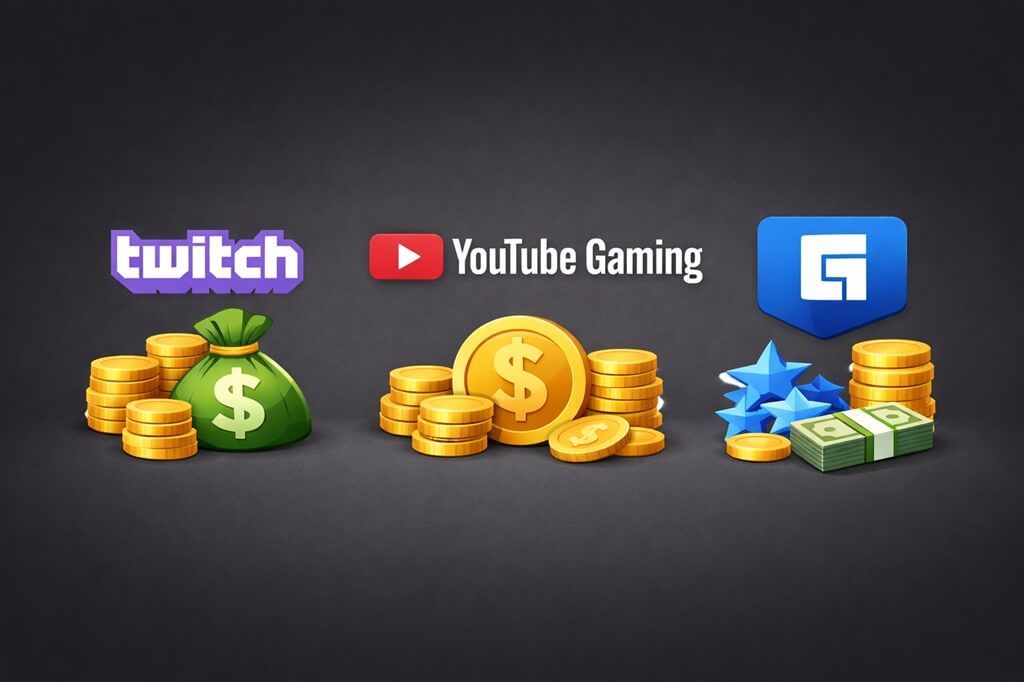
Platform-based monetization usually becomes a streamer’s first structured income source. Twitch provides a clear entry point through its Affiliate program, designed to reward consistency rather than massive reach.
Key entry requirements include
- 25 followers
- 3 average viewers
- 4 or more stream days
- 8 or more total hours streamed per month
Once approved, revenue opens across several channels at the same time.
Subscriptions create recurring monthly income, Bits allow real-time audience support at a rate of $0.01 per Bit, and ads generate passive revenue during live sessions and VOD playback. Game sales tied to Twitch also contribute incremental earnings.
Partner status later unlocks higher ad revenue shares and additional platform features, rewarding long-term growth.
YouTube Gaming offers a different structure that favors video longevity and cross-format exposure.
Monetization runs through AdSense ads, channel memberships, Super Chats during live streams, and shared revenue connected to YouTube Premium views.
Memberships function as a loyalty layer, giving fans paid access to gated content without relying on external tools.
Facebook Gaming focuses heavily on live interaction and community support.
Monetization tools center on Stars, in-stream ads, and fan subscriptions, all designed to reward engagement during broadcasts.
Stars convert directly into income at a rate of $0.01 each, creating a simple tipping system tied closely to viewer participation.
2. Donations and Viewer Tips
Viewer tips often become the fastest income source once live engagement starts building.
No formal approval process stands in the way, allowing creators to earn as soon as viewers feel motivated to support content.
Platform-native systems set clear value per interaction:
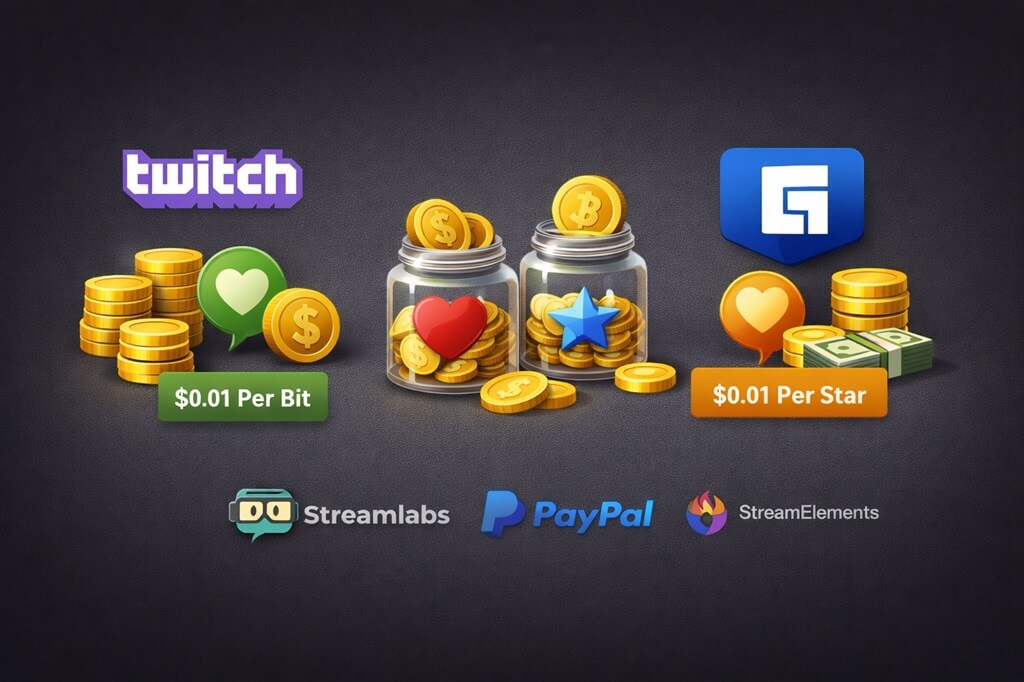
- Twitch Bits pay $0.01 per Bit received
- Facebook Stars pay $0.01 per Star
Third-party services such as Streamlabs, StreamElements, and PayPal allow direct tipping without platform fees, increasing take-home earnings.
Crypto donations add another option that works globally and removes banking friction.
Results depend less on tools and more on connection.
Streamers who acknowledge supporters live, respond to chat messages, and create shared moments during broadcasts often see higher tip frequency and larger contributions.
3. Affiliate Marketing
Affiliate marketing transforms everyday recommendations into ongoing income.
Amazon Associates allows commissions on gaming gear, accessories, and games shown or discussed during streams.
Streamers often demonstrate gear in real time, such as an ergonomic gaming mouse used during long sessions, which allows viewers to see performance and comfort benefits before clicking affiliate links placed in panels or video descriptions.
Additional programs cover webcams, microphones, chairs, and digital storefronts like Epic Games Store or Green Man Gaming.
Placement plays a major role in performance. Links positioned in Twitch panels, video descriptions, or custom gear pages remain active long after streams end.
Commission rates can reach up to 30%, turning archived content into passive revenue that grows alongside a creator’s catalog.
4. Subscriptions and Membership Models
Recurring income adds predictability to streaming revenue.
Twitch subscriptions operate on tiered pricing, offering benefits that grow with support level.
Custom emotes, ad-free viewing, and exclusive chat access reward loyal viewers and strengthen community identity.
YouTube memberships follow a similar model while integrating tightly with video uploads and live streams.
Early access, behind-the-scenes clips, and members-only broadcasts give fans reasons to stay subscribed month after month.
External platforms expand creative control over rewards. Patreon and Ko-fi allow customized offerings such as:
- Private Discord access
- One-on-one gaming sessions
- Monthly content drops
Successful membership systems balance affordability and exclusivity so casual supporters feel welcome while dedicated fans receive meaningful value.
5. Sponsorships and Brand Deals
Brand partnerships often mark a transition into higher earning potential.
Streamers with roughly 10,000 followers can command $500 to $2,000 per sponsored session, depending on engagement and audience fit.
Brands evaluate several factors during deal selection:
- Community engagement levels
- Brand alignment
- Trust built with viewers
Gaming chairs, energy drinks, hardware companies, and in-game content sponsors dominate partnership opportunities.
Mid-tier creators often secure deals through direct outreach supported by clear media kits that showcase audience demographics and performance metrics.
6. Merchandise Sales
Merchandise turns personal branding into physical and digital products.
Streamers commonly sell clothing like t-shirts and hoodies alongside mousepads, mugs, and digital goods such as overlays or wallpapers.
Platforms including Teespring, Shopify, and Streamlabs Merch handle printing, shipping, and payments.
Limited product drops reduce upfront risk while encouraging faster purchasing decisions.
Merchandise requires planning and initial setup, yet it strengthens brand recognition and deepens fan loyalty over time.
7. Game Coaching and Skill-Based Services
High-skill players unlock additional income by teaching others.
Coaching platforms such as Gamer Sensei, Fiverr, Discord, and Patreon support one-on-one lessons and group sessions tailored to specific games or ranks.
Typical starting rates fall within a clear range of $10 to $20 per hour for new coaches.
Top players often scale far higher, especially in competitive titles.
Recorded VOD courses add another layer of income, with many selling for $49 or more.
Games like League of Legends, Valorant, and Overwatch generate consistent demand tied to ranked progression and competitive improvement.
8. Repurposing Content and Esports Participation
Short-form content extends reach while opening new revenue streams.
Highlight clips uploaded to FreshCut.gg earn $FCD tokens that convert into real money.
YouTube Shorts and TikTok further expand visibility, driving new viewers toward live channels.
Competitive play adds both income and credibility.
Sports tournaments across Fortnite, Valorant, and League of Legends range across skill levels and prize pools.
Bugha’s $3 million Fortnite World Cup win at age 16 demonstrates how tournament success can rapidly elevate visibility and attract long-term sponsorship opportunities.
Closing Thoughts
Multiple income paths now exist for gamers who stream consistently and think strategically.
Passive methods like affiliate links support long-term growth, while high-reward options like tournaments and brand deals accelerate earnings.
Success depends on steady schedules, authentic community engagement, and varied content formats.
Industry growth shows no signs of slowing, rewarding streamers who adapt and expand how they earn year after year.

Dave Mustaine is a business writer and startup analyst at Sharkalytics.com. His articles break down what happens after the cameras stop rolling, highlighting both big wins and behind-the-scenes challenges.
With a background in entrepreneurship and data analytics, Dave brings a sharp, practical lens to startup success and failure. When he’s not writing, he mentors founders and speaks at entrepreneur events.