
Growing concern for environmental sustainability has encouraged many entrepreneurs to look at recycling as a potential revenue-generating activity.
Businesses and governments are placing stronger emphasis on circular economy practices, making recycling an attractive field for investment.
Objectives here focus on evaluating profitability, start-up requirements, operational factors, and financial outcomes connected to various recycling models.
Without further ado, let us begin.
Market Overview
Growing interest in recycling has developed as regulations tighten and public pressure rises.
Material prices move frequently, creating both challenges and opportunities for operators.
Many regions now encourage higher recovery rates through policy incentives, taxes on disposal, and stricter contamination standards.
Investors and entrepreneurs often examine recycling during periods when commodity prices climb, creating favourable conditions for resale.
Stronger recovery activity can be observed in multiple segments. Several categories show rapid expansion due to rising material scarcity, regulatory focus, and growing demand from manufacturers attempting to reduce production costs.
A set of key drivers shapes current market behaviour:
- Stronger environmental compliance rules
- Rising awareness regarding waste reduction
- Shifts in commodity values affecting recyclers
- Manufacturing demand for secondary materials
Several high-potential niches are drawing new operators:
- E-waste processing driven by rapid electronics turnover
- Plastic reprocessing supported by brand commitments to recycled content
- Compost production supported by food waste regulations
- Cardboard recovery driven by e-commerce packaging growth
Key Business Models in Recycling
Entrepreneurs entering the recycling sector choose among models that vary in complexity, capital needs, and operational intensity.
Many new operators start small and expand gradually as volume increases and material supply stabilises.
Small-scale models allow fast market entry with minimal financial pressure. Examples include:
- Mobile applications for household collection
- Doorstep e-waste pickup
- Compost distribution and collection systems
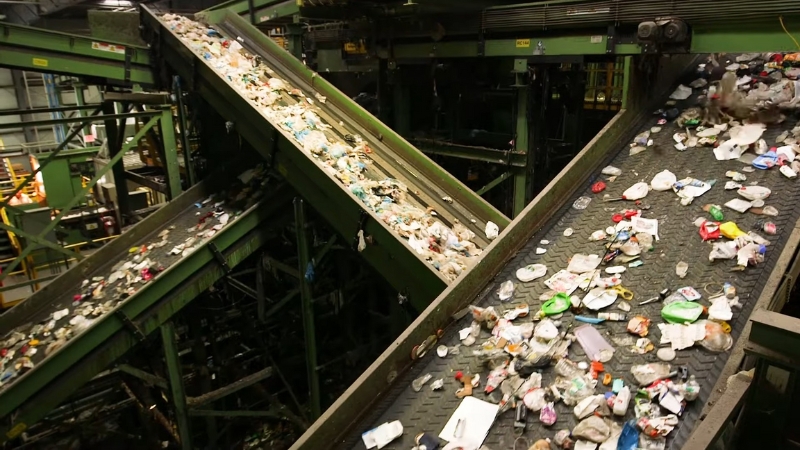
Mid-sized operations progress toward facility-based sorting. These sites usually handle mixed recyclables and depend on trained teams for separation, baling, and preparation of outgoing materials.
Moderate investment is required for conveyors, sort lines, compactors, and safety measures.
Large-scale MRFs move significant tonnage through automated equipment.
Optical sorters, magnets, air separation systems, and robotic arms raise throughput while reducing error rates. Capital requirements increase substantially, but so does efficiency.
Brokerage models avoid the cost of processing infrastructure. Operators act as intermediaries between waste generators and buyers.
A little more than communication tools, compliance knowledge, and strong networks is needed.
How Recycling Saves Money for Businesses
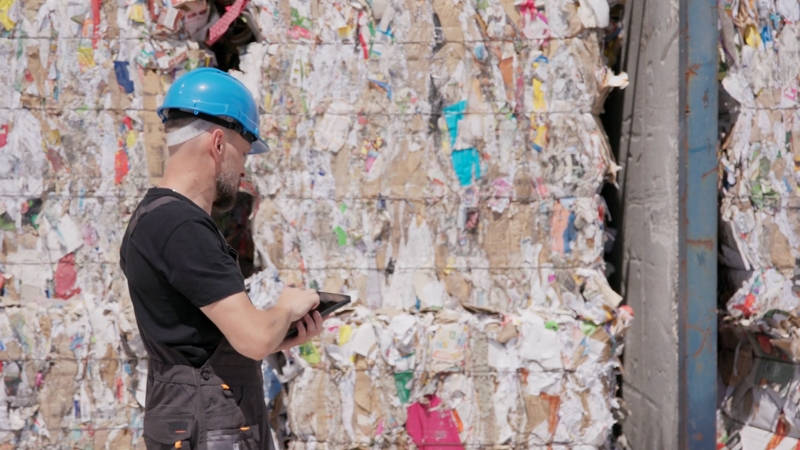
Many organisations seek recycling services to reduce operational expenses.
Depending on your waste type, it’s important to understand what can you put in a skip bin to avoid contamination, overloading fines, or improper disposal.
For example, separating cardboard and paper for recycling can significantly reduce waste disposal expenses, while avoiding general waste contamination helps businesses comply with local council regulations.
Additionally, Australia has landfill levies that vary by state, which increase the cost of sending waste to landfill. Proper recycling practices can help businesses minimise these levies, creating immediate cost savings.
Companies that generate substantial volumes of recyclable materials may also be eligible for rebates or incentives, further improving the financial benefits of recycling.
Essential Investments for Starting a Recycling Business
Successful entry into recycling depends on aligning start-up budgets with the chosen model.
Capital-heavy facilities require buildings, machinery, storage capacity, vehicle fleets, and compliance systems.
Software-centred approaches rely on mobile platforms, CRM tools, and logistics partners for fulfilment.
Large facilities often demand investments reaching several hundred thousand dollars or more. Manual sorting sites may begin with lower budgets but still need conveyors, bins, PPE, balers, and basic infrastructure.
App-based operations reduce costs significantly because external transport partners manage pickup and delivery.
Lean Entry Options (Detrack)
View this post on Instagram
Introductory models allow entrepreneurs to test demand before committing to large financial outlays.
Several examples illustrate accessible entry points:
- Waste brokering can start with minimal infrastructure, focusing primarily on networking, communication tools, and marketing.
- E-waste collection can scale by using outsourced drivers or contractors, keeping ongoing costs manageable while still enabling efficient pickups and deliveries.
- App-based logistics functions scaled with outsourced drivers, reducing ongoing expenses
These lean entry points allow new operators to enter the recycling market in Australia with low risk, test local demand, and grow gradually as opportunities expand.
Operational Costs and Efficiency Considerations
Operating a recycling business involves more than just collecting and sorting waste; it requires tight operational control, strategic cost management, and long-term planning to ensure profitability and scalability.
1. Collection and Transportation Costs
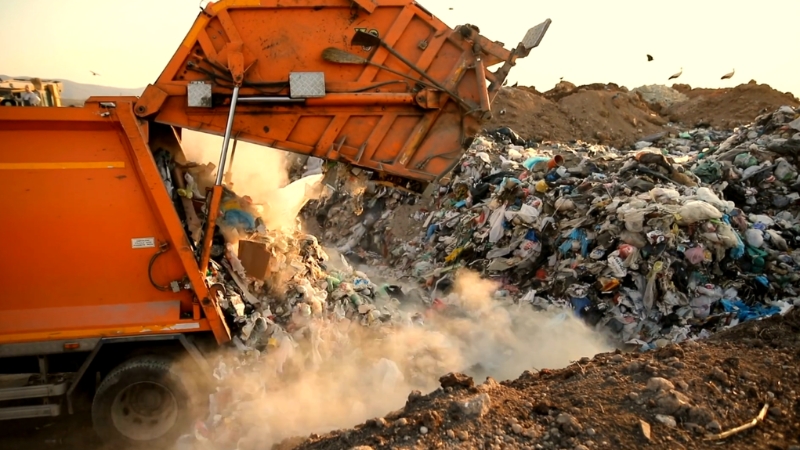
Collection logistics often account for a significant portion of ongoing expenses. These include:
- Fuel and vehicle maintenance
- Insurance
- Labour costs
- Administrative overhead
Routing optimisation software and fleet-management tools help reduce travel distances, minimise idle time, and improve pickup efficiency.
2. Processing Facility Expenses
At the core of most recycling businesses lies the Material Recovery Facility (MRF) or sorting centre.
Common cost factors include:
- Electricity for balers, conveyors, and sorters
- Machinery maintenance
- Labour for manual sorting
- Disposal of contaminated or non-recyclable material
Processing costs for recyclables in Australia typically range from AUD 80 to AUD 150 per tonne, depending on the size of the facility, level of automation, and efficiency of operations.
3. Importance of Clean Output and Contamination Control
@lottiedalziel Please stop doing this 🛑 #recycling #recycle #sustainability ♬ original sound – Lottie Dalziel🌏Sustainability
Even small contamination rates can drastically reduce resale value.
Clean output is essential because:
- Buyers pay more for high-purity materials
- Contaminated loads may be rejected
- Poor quality affects reputation and limits contracts
Training, quality monitoring, and public education are key mitigation strategies.
4. The ROI of Automation
Automation technologies are transforming modern recycling operations. Examples include:
- Robotic arms and AI sorters
- Optical sorters
- Data analytics tools
Though expensive upfront, many systems achieve payback in 2–4 years with steady volumes.
Revenue Streams and Commodity Values
Recycling businesses generate revenue through resale of processed materials and through specialised services.
Material prices fluctuate based on global supply and demand.
Additional revenue opportunities include:
- Cardboard rebates
- Document shredding
- Certified disposal for regulated materials
- Secure data destruction in e-waste
- Compost sales for farms and landscaping
Diversified income helps stabilise operations during volatile commodity cycles.
Summary
Recycling can be profitable when operators choose the right model, optimise logistics, and match facility capacity with market opportunities.
Careful planning supports long-term growth, while technology improves quality and reduces waste.
Businesses benefit financially while contributing to sustainable resource use and lower disposal costs.

Viola Moorhouse is the coauthor and research lead at Sharkalytics.com, specializing in startup performance tracking and investor strategy.
With a background in market research and business journalism, Viola focuses on separating the hype from the reality in the world of televised entrepreneurship. She’s passionate about making complex startup stories accessible to a wide audience.