

The most effective way to reach new customers in 2026 is to combine high-intent visibility, credible proof, useful content, and disciplined measurement.
Start with a narrowly defined customer problem. Then appear where buyers search, watch videos, compare providers, ask AI tools for recommendations, or seek advice from trusted specialists.
Paid search captures active demand. Expert content supports organic and AI-search discovery. Creator partnerships can introduce an unfamiliar brand. First-party data improves follow-up and attribution.
The Federal Reserve’s 2026 employer-firm survey named reaching customers and growing sales as the leading operational challenge. U.S. retail e-commerce sales also reached a seasonally adjusted $326.7 billion in the first quarter of 2026, up 9.8% from a year earlier.
Start With a Narrow Customer Definition
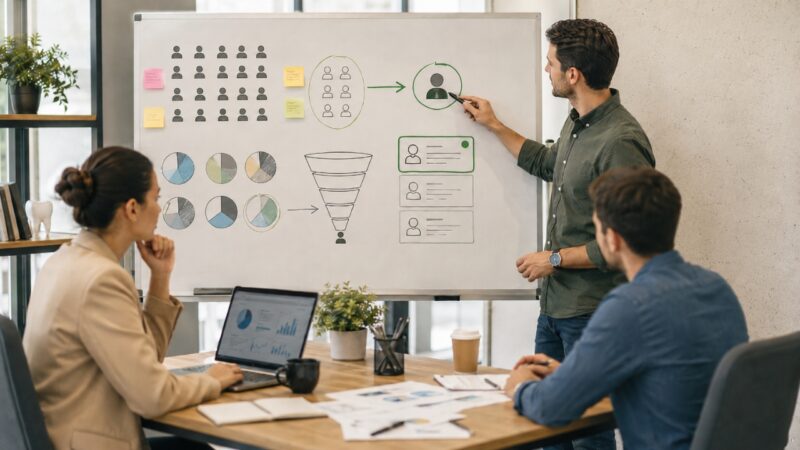
A campaign works better when it targets a specific buying situation rather than a broad demographic.
“Small-business owners” is too wide for useful messaging. “Independent dental practices with five to 20 employees that lose appointment revenue through late cancellations” provides a real problem and a clearer offer.
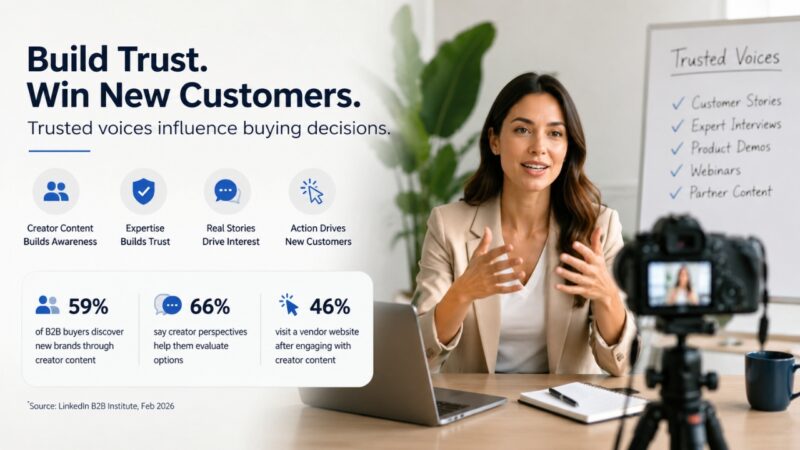
Customer interviews, sales notes, search-query reports, reviews, and on-site search data can reveal the language buyers use. Marketing copy should reflect it naturally. No channel reaches every new customer efficiently. Selection should follow intent, purchase value, sales cycle, and research habits. Search advertising is often strongest when a buyer already knows the problem. Video suits products that need demonstration. Email rarely creates demand from strangers, but it can convert people who requested a quote, joined a waitlist, or abandoned a purchase. A professional SEO agency can help identify technical weaknesses, content gaps, and visibility opportunities that may prevent useful pages from appearing prominently in traditional or AI-assisted search. Google’s July 2026 guidance says generative search features rely on core Search ranking and quality systems. Google recommends unique, first-hand, non-commodity content rather than pages that restate common advice. Structured data may support rich results, but no special AI schema or llms.txt file is required for Google’s generative features. A commercial cleaning company, for example, could publish a price guide based on building size, cleaning frequency, location, and compliance needs. A generic article about office cleanliness gives a buyer little reason to select one provider. Google drew a clear line around AI search optimization: it’s SEO. On May 15, 2026, Google published its official guide, “Optimizing your website for generative AI features on Google Search.” John Mueller announced the release on the Google Search Central Blog, and Google added a… — Semrush (@semrush) July 15, 2026 Google added generative AI performance reporting to Search Console in June 2026. A July update introduced platform properties for Instagram, TikTok, X, and YouTube, allowing eligible users to see which Google queries lead to social and video posts. New customers often respond more strongly to credible practitioners than polished corporate promotion. For B2B marketing, LinkedIn reported in February 2026 that nearly six in 10 surveyed buyers discover new brands through creator content. About two-thirds said creator perspectives helped them evaluate options, while nearly half visited a vendor website after engaging with creator material. The figures are platform-specific evidence, not a universal benchmark. A payroll software company may gain more qualified attention from a respected HR consultant with 18,000 relevant followers than from a much larger lifestyle account. Customer stories, expert interviews, employee demonstrations, webinars, and partner newsletters can serve a similar role. Strong proof explains the original problem, decision criteria, implementation experience, and measurable results. A new customer needs a clear reason to act before trust is fully established. The first offer should reduce uncertainty without attracting unsuitable leads. Useful entry points include a sample, diagnostic call, calculator, trial, fixed-price assessment, or short buying guide. Match the offer to purchase risk. A $40 product may need strong photography and a clear return policy. A $40,000 service may require a case study, references, a qualification call, and a scoped pilot. Landing pages should use one primary action, explain who the offer suits, state what happens after submission, and remove unnecessary form fields. First-party data helps businesses reconnect with prospects and measure which campaigns produce paying customers. Useful records may include consented email addresses, lead source, requested service, sales stage, purchase history, and final outcome. Google Customer Match can use customer-provided data across Search, Shopping, Gmail, YouTube, and Display. Enhanced conversions for leads use hashed first-party information to improve attribution between an online lead and an eventual offline sale. Collection must follow applicable privacy, consent, and platform rules. A smaller, accurate list with clear permission is more useful than a large database filled with outdated contacts. The best marketing plan proves which spending creates additional customers. Track customer acquisition cost, lead-to-customer conversion rate, gross-margin payback, repeat purchase rate, and revenue by source. Avoid treating impressions, clicks, or form submissions as final outcomes. Incrementality testing compares an exposed group with a control group to estimate how many sales would not have happened without the campaign. Google’s 2026 measurement guidance reports an average 8% incremental return on ad spend among 99 Conversion Lift studies involving value-based bidding and enhanced conversions. As a Google analysis, the result offers context rather than a guaranteed outcome. Smaller firms can apply the same principle with geographic tests, staggered launches, matched customer groups, or temporary channel pauses. Ask whether marketing created added demand or merely claimed credit for a likely sale. Reaching new customers in 2026 requires sharper choices rather than constant activity. Define a real buying problem, select channels according to intent, publish evidence that AI systems and human buyers can verify, and make the first conversion easy. A business does not need to appear everywhere. It needs to be visible in valuable moments, credible during evaluation, easy to contact, and worth choosing. Viola Moorhouse is the coauthor and research lead at Sharkalytics.com, specializing in startup performance tracking and investor strategy. With a background in market research and business journalism, Viola focuses on separating the hype from the reality in the world of televised entrepreneurship. She’s passionate about making complex startup stories accessible to a wide audience.
Match Each Channel to Customer Intent
Channel
Best Use
Practical 2026 Approach
Main Metric
Search advertising
Active demand
Target problem-led queries and use a relevant landing page
Cost per qualified customer
Organic and AI search
Durable discovery
Publish guides, comparisons, original data, and case studies
Qualified organic conversions
Short video and social
Awareness
Demonstrate outcomes and answer common objections
Engaged visits
Creators and partners
Trusted introduction
Work with niche specialists whose audience matches the buyer
Incremental leads or sales
Email and CRM
Prospect follow-up
Segment by source, interest, and sales stage
Lead-to-customer rate
Local discovery
Nearby demand
Keep listings, hours, service areas, images, and reviews accurate
Calls and bookings
Make Content Easy to Find in AI Search
AI-search visibility in 2026 still depends on strong SEO foundations, crawlable pages, original value, and clear business information.
Use Trusted People to Introduce the Brand
Offer a Low-Risk First Step
Build a First-Party Data System
Measure New Customers, Not Marketing Activity
Final Takeaway