
Pricing the concrete and steel is the part almost everyone gets right. The trouble arrives later, as a cost nobody wrote down. Utility tap fees. A stormwater permit. Sales tax on labor. The furniture the tenant assumed was included. Each one feels small, yet together they can quietly eat your margin.
So where does a commercial build budget actually leak, and who is usually holding the bucket?
Key Takeaways
- Soft costs such as fees, studies, legal work and insurance often hit before construction even starts.
- Utility connections, impact fees and soil conditions are the items owners most often assume someone else priced.
- Washington charges retail sales tax on the full prime contract price, labor included.
- Prevailing wage rules range from no state law at all in Florida to a very low threshold in New Jersey.
- Furniture, IT cabling, signage and commissioning rarely sit inside the contractor’s number.
- Contingency should shrink as drawings mature, but it should never vanish before closeout.
Why a Commercial Build Budget Starts Leaking Before Day One
Owners tend to treat the contractor’s bid as the whole number, while the contractor reasonably prices only what appears on the drawings. Anything between those two views belongs to nobody, which in practice means it belongs to you. A quick SWOT analysis at the start surfaces those gaps while they are cheap to fix.
Soft Costs Arrive First
Architect and engineering fees, plan review charges, legal and financing costs, environmental assessments and builder’s risk insurance all get paid before a shovel moves.
First time owners forget them most, expecting the general contractor’s proposal to cover everything. It usually covers construction only, so ask in writing which items your commercial build budget must carry separately.
Surveys, Site Plans and Soil Reports
View this post on Instagram
A boundary survey, a site plan and a geotechnical report sound like paperwork, but setbacks, easements and existing utility lines decide where the building can sit and how much earthwork it needs. For simpler permit submittals, a drafted plan from a service such as Get a Site Plan can help you see the lot clearly early on, although many commercial jurisdictions will still ask for a stamped survey from a licensed surveyor or engineer.
Soil borings are a separate line. Skip them, and you may pay for unplanned excavation or imported fill.
Commercial Build Budget Costs Hiding Below Grade
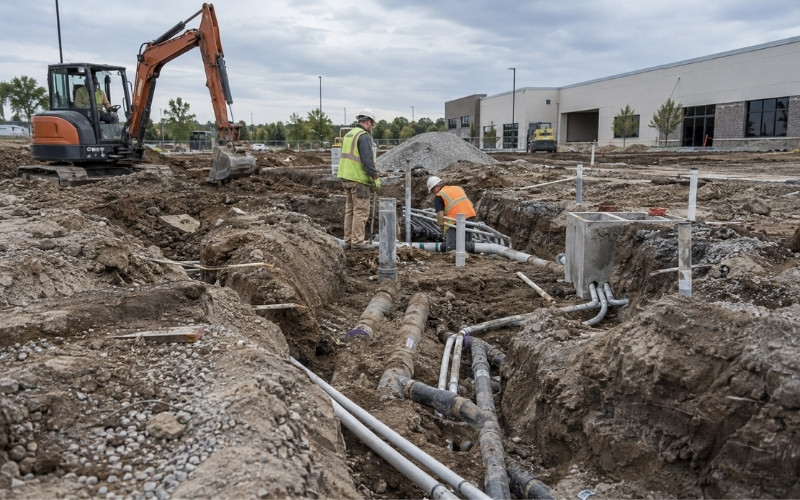
The dirt is where an otherwise tidy commercial build budget gets ambushed. Civil engineers usually spot these items, but the costs land in the owner’s column.
Impact Fees and Utility Connections
Water and sewer taps, transformer upgrades and impact fees come from the city, county or utility, so they rarely appear in a bid. Florida shows how specific the rules can get. Under the Florida Statutes, local governments cannot collect impact fees before the building permit is issued, must give 90 days’ notice before a new or higher fee takes effect, and generally cannot raise an existing fee by more than 50 percent without proving extraordinary circumstances. Still, payment lands exactly when cash is tightest.
Stormwater Permits
According to the EPA, any construction activity that disturbs one acre or more, or a smaller piece of a larger common plan, needs Clean Water Act permit coverage for stormwater discharges. That means erosion controls and regular inspections for as long as the site stays open, a cost owners often first notice on an early draw request.
Commercial Build Budget Rules That Change by State
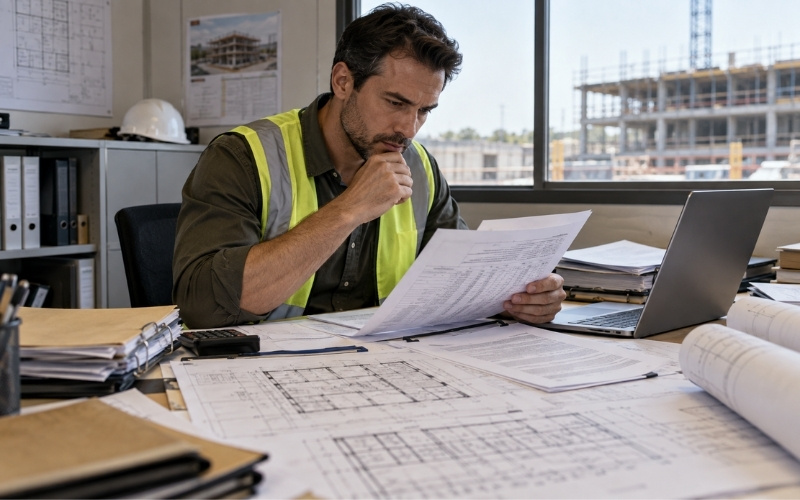
Two buildings with identical drawings can carry very different totals depending on the state. Taxes and labor rules show it best, and it is a good reminder that tax talk alone rarely tells you what a location truly costs.
Sales Tax on Construction Labor
Washington taxes more than materials. The Washington Department of Revenue states that prime contractors must collect retail sales tax from the landowner on the gross contract price, with no deduction for costs, and the tax is calculated before any retainage is held back.
Leaving that out of a commercial build budget in Washington is a serious miss. Developers from other states forget it most.
Prevailing Wage Requirements
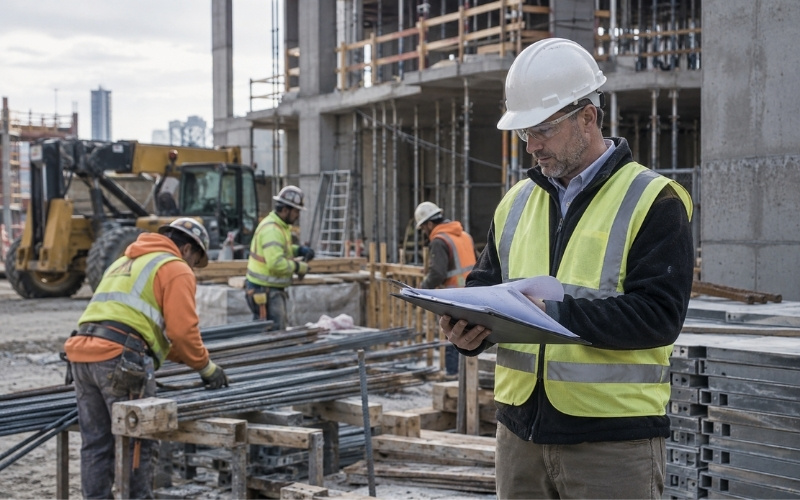
If your project involves a public owner or public funding, state prevailing wage law may set your labor rates. The range is extreme. The U.S. Department of Labor lists Florida, Georgia, Arizona and North Carolina among the states with no prevailing wage law, while New Jersey’s coverage threshold starts at $2,000 and Connecticut’s applies to new construction contracts of $1 million or more.
Developers chasing incentives often learn this after the labor estimate is locked.
Owner Side Costs Nobody Prices
A building can be finished and still not be ready to open. These items live between the contractor’s scope and the tenant’s move in date.
- Furniture, fixtures and equipment, from desks to break room appliances
- Low voltage cabling, security systems and IT hardware
- Exterior and interior signage, which often needs its own permit
- Commissioning, testing and third party inspections
- Construction loan interest and lender fees during the build
Here is how responsibility tends to break down on a typical commercial build budget:
| Hidden line item | Who usually forgets it | When it shows up |
| Soft costs (fees, legal, insurance) | First time owners | Before construction starts |
| Geotechnical report | Owners trying to save early | During excavation |
| Utility taps and impact fees | Owner and contractor, each assuming the other has it | At permit or connection |
| Stormwater compliance | Owners and lenders | First draw request |
| Sales tax on labor (Washington) | Developers from other states | Every progress invoice |
| Prevailing wage | Developers using public incentives | Labor estimate or audit |
| FF&E, IT and signage | Tenants and owners | Weeks before opening |
| Construction loan interest | Owners without a finance lead | Monthly during the build |
Tracking cash flow alongside a few solid financial planning rules keeps that last row from becoming a surprise.
Contingency and Escalation in a Commercial Build Budget
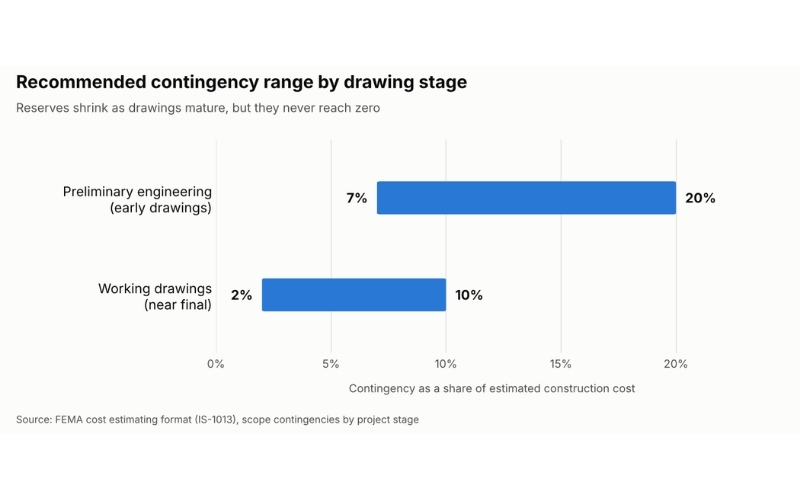
The cost estimating format used by FEMA suggests 7 to 20 percent for scope uncertainty at the preliminary engineering stage, dropping to 2 to 10 percent once working drawings exist. Owners often spend it too early, on upgrades rather than true unknowns. Logging every draw and leaning on simple risk models beats making the call on gut feeling.
Escalation Between Bid and Build
If groundbreaking is six months or a year away, prices can move. Add an escalation allowance and watch for forecast red flags whenever someone promises costs will settle down soon. Owners who negotiate escalation out of a long bid often wish they hadn’t.
FAQ
Conclusion
Most budget surprises are not really surprises. Somebody knew the cost existed and assumed another person was carrying it. Before you sign, walk this list with your architect, general contractor and lender, and assign a name to every item. A commercial build budget with clear owners for each line is far harder to blow up.

Dave Mustaine is a business writer and startup analyst at Sharkalytics.com. His articles break down what happens after the cameras stop rolling, highlighting both big wins and behind-the-scenes challenges.
With a background in entrepreneurship and data analytics, Dave brings a sharp, practical lens to startup success and failure. When he’s not writing, he mentors founders and speaks at entrepreneur events.